Skip to main content Skip to footer


This foundation, also known as the Research Center for the Unknown, was created by António Champalimaud (1918-2004) in his will. It is primarily dedicated to the development of advanced biomedical research programs and the provision of interdisciplinary clinical care.
At the Champalimaud Foundation, research is carried out in cutting-edge areas and the priority is to encourage discoveries that benefit people, as well as to sponsor new standards of knowledge. Its activity is carried out in the areas of neuroscience and cancer. In this way, research programs and excellent clinical services are created, also carrying out, out of doors, a program to fight blindness.
The António Champalimaud Vision Award, worth one million euros, is the largest in the field of ophthalmology and has a strong impact on the fight against blindness. The Champalimaud Foundation supports artificial intelligence projects in healthcare and stands out for its sustainable architecture. Its outdoor area is a popular public space, and the center integrates science and art with regular cultural events.
The building of the Research Center for the Unknown
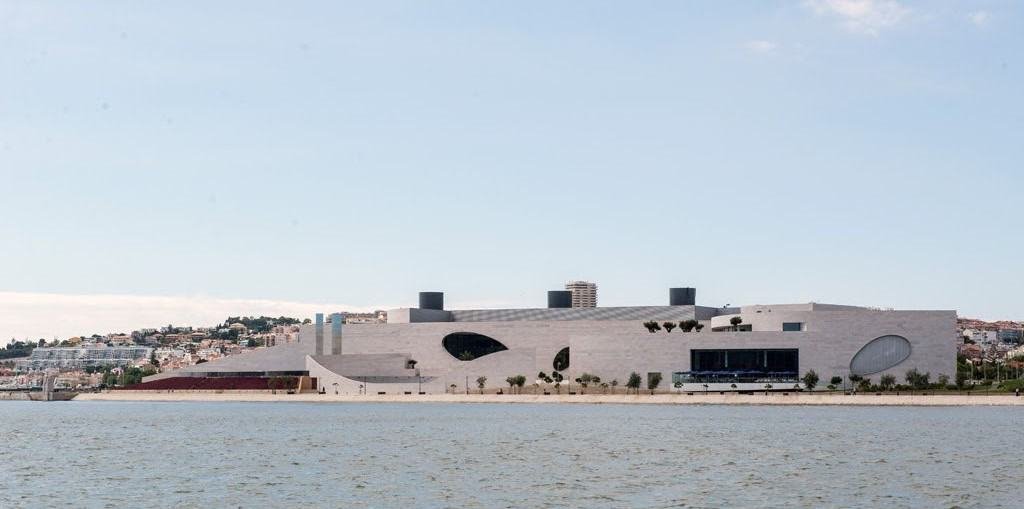
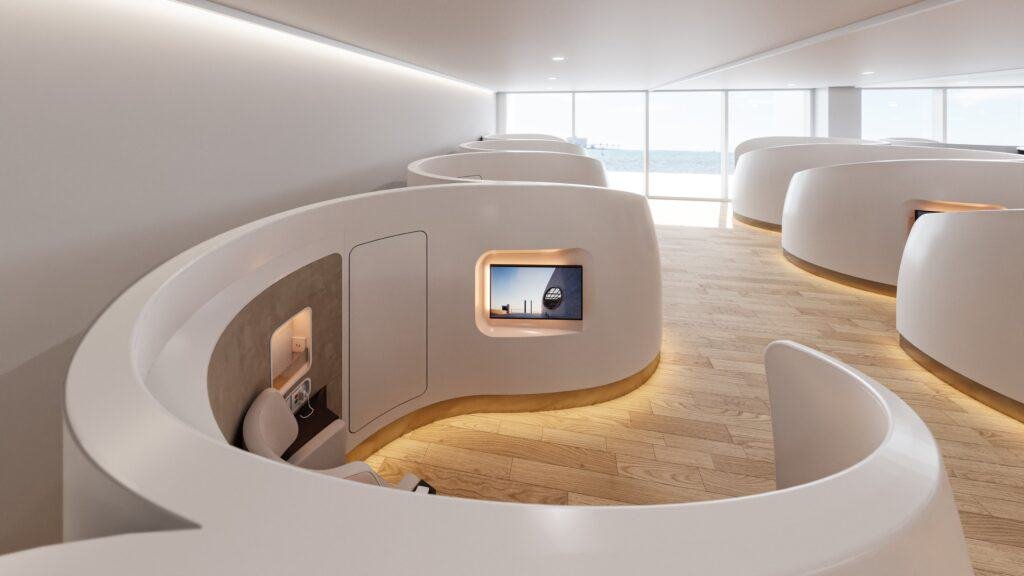
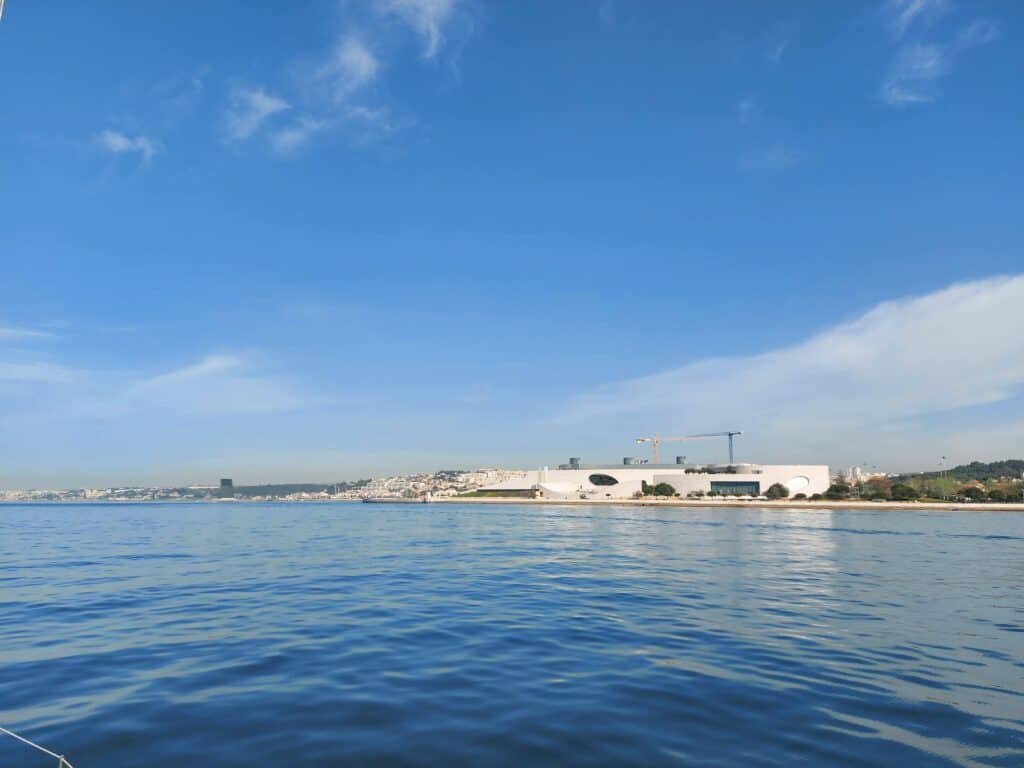
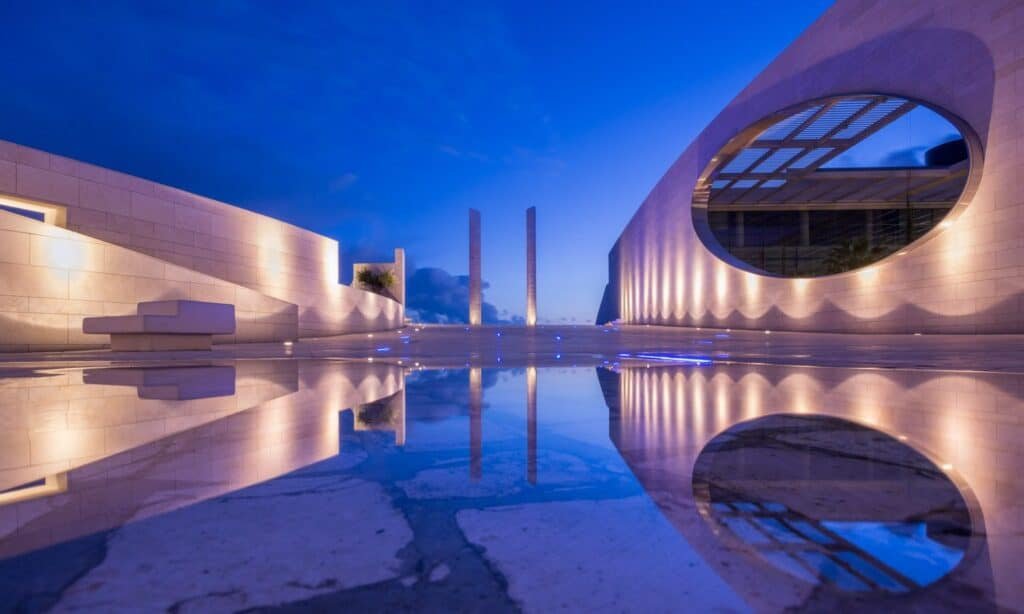
Its building is as innovative and relevant as the biomedical research that takes place inside. It is a project by the Goan architect Charles Correa who sought to elevate architecture to sculpture; sculpture to beauty; and beauty to therapy – in order to honor the Center’s activities. Furthermore, the building houses state-of-the-art laboratories, conference rooms, and patient care facilities. It opened on October 5, 2010.
It is located on a 65,000 square meter site on the riverfront. It is a privileged location on the banks of the Tagus River, close to the Monument to the Discoveries, and symbolic for being the place from where Portuguese navigators departed five centuries ago towards the “unknown”.
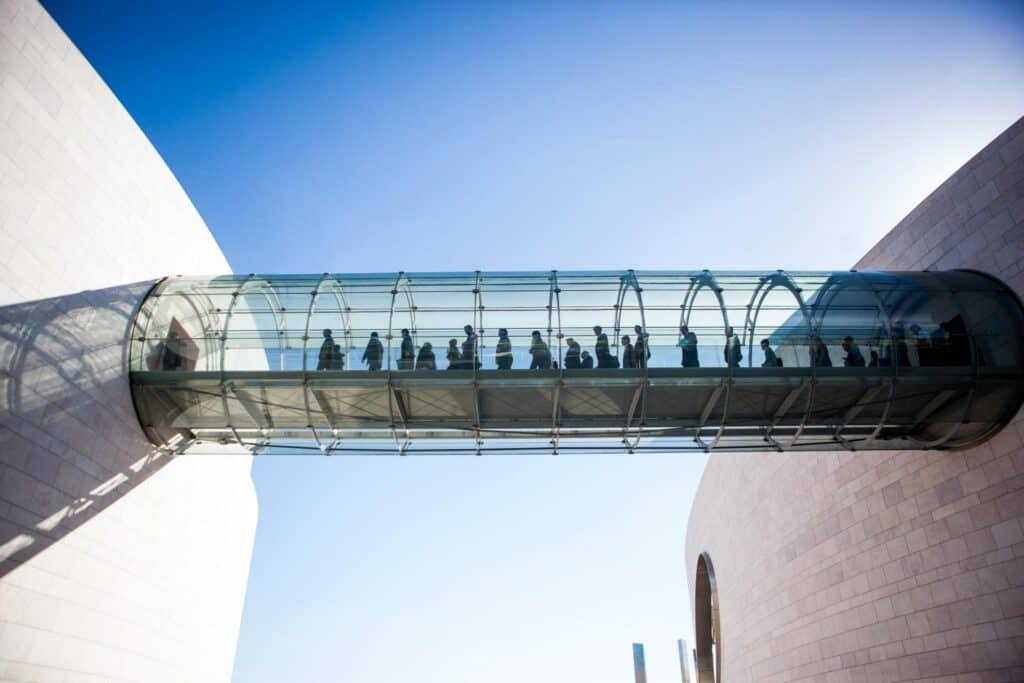
The complex includes two main blocks: the research center / cancer treatment center, and the auditorium (connected by an elevated walkway). It also has gardens, an outdoor amphitheater and a restaurant with a magnificent terrace.
Global Impact Programs
The Champalimaud Foundation does not limit its action to Portugal. Through its Research Center for the Unknown, it leads global initiatives:
- The Vision for Africa Program, a partnership with local institutions to prevent and treat eye diseases in Portuguese-speaking African countries.
- Collaborations with world-renowned universities and medical centers, including Harvard Medical School, University College London and MIT.
- The Foundation also participates in international research data networks, promoting knowledge sharing in areas such as precision oncology.
Some curiosities about the Champalimaud Foundation
The Champalimaud Foundation is known for being an institution of excellence in scientific research. Its researchers have already published more than 1,200 scientific articles and received several awards and distinctions, including the Champalimaud Award for Medical Research, which is one of the largest awards in Europe in the field of medicine.
Another curiosity about the Champalimaud Foundation is its research fellowship program, which offers opportunities for researchers from around the world to develop innovative research projects in the area of neuroscience and oncology. In addition, the Foundation also offers training programs for doctors and other health professionals, as well as science outreach programs for the general public.
The best place to work
According to the American magazine The Scientist, which conducted a survey of more than 1,500 postdoctoral researchers, the Champalimaud Foundation came in first place. Thus, in 2012, this first place guaranteed it to be considered one of the best places to work, inside or outside the United States.
It is also an excellent place to visit
Without a doubt, this is a place to visit. Whether to attend a conference, stroll through the gardens, delight in a meal at Darwin’s Café or peacefully enjoy the unique light of Lisbon. Finally, end the day watching the sunset while contemplating the Tagus River and the Bugio lighthouse in the waters of the Atlantic Ocean.