Skip to main content Skip to footer


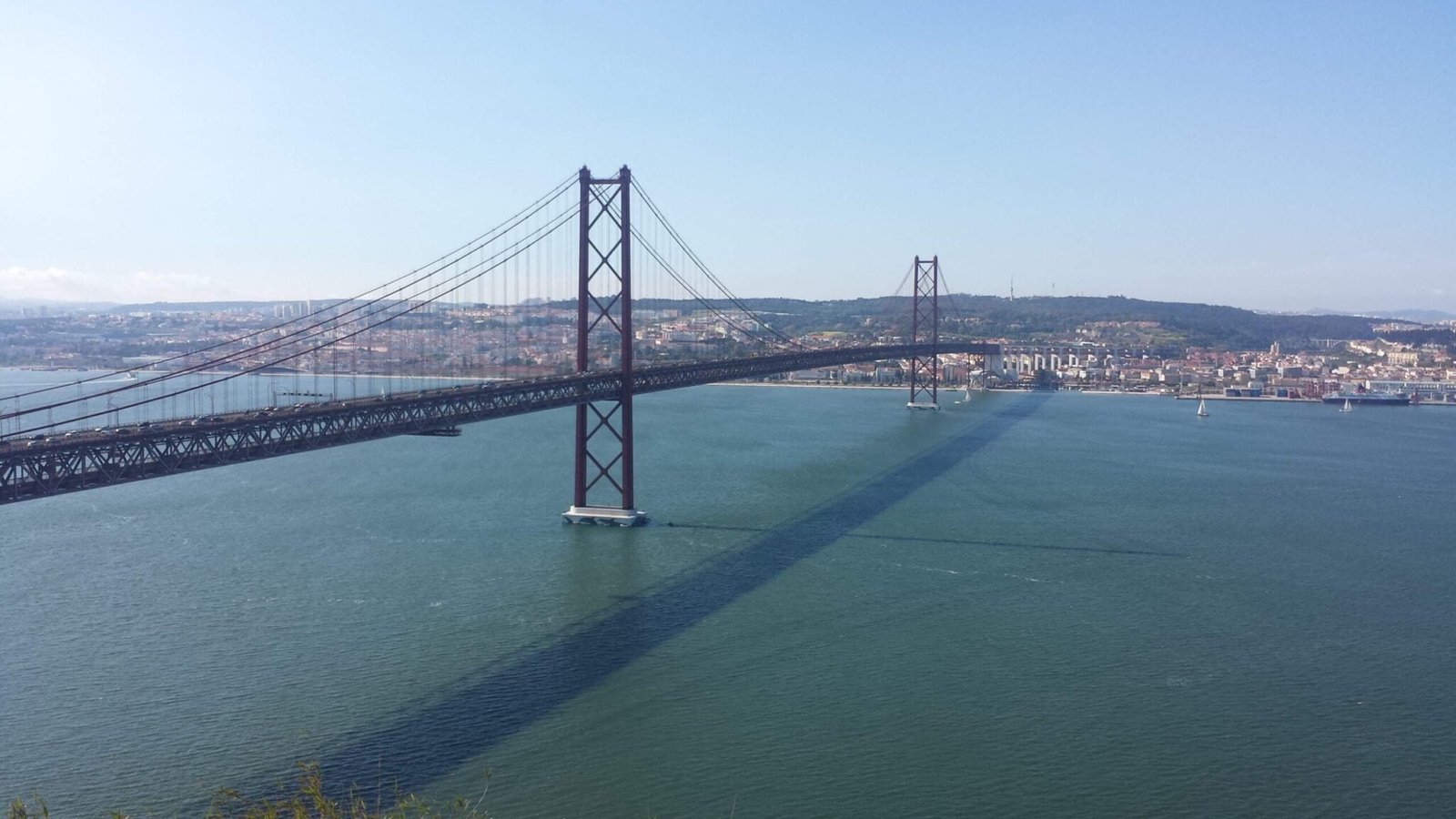
On August 6, 2026, the 25 de Abril Bridge celebrated its 60th anniversary. Over six decades, it has become much more than just a link between Lisbon and Almada. It is one of the city’s greatest symbols, a landmark of Portuguese engineering, and one of the most photographed monuments in Portugal.
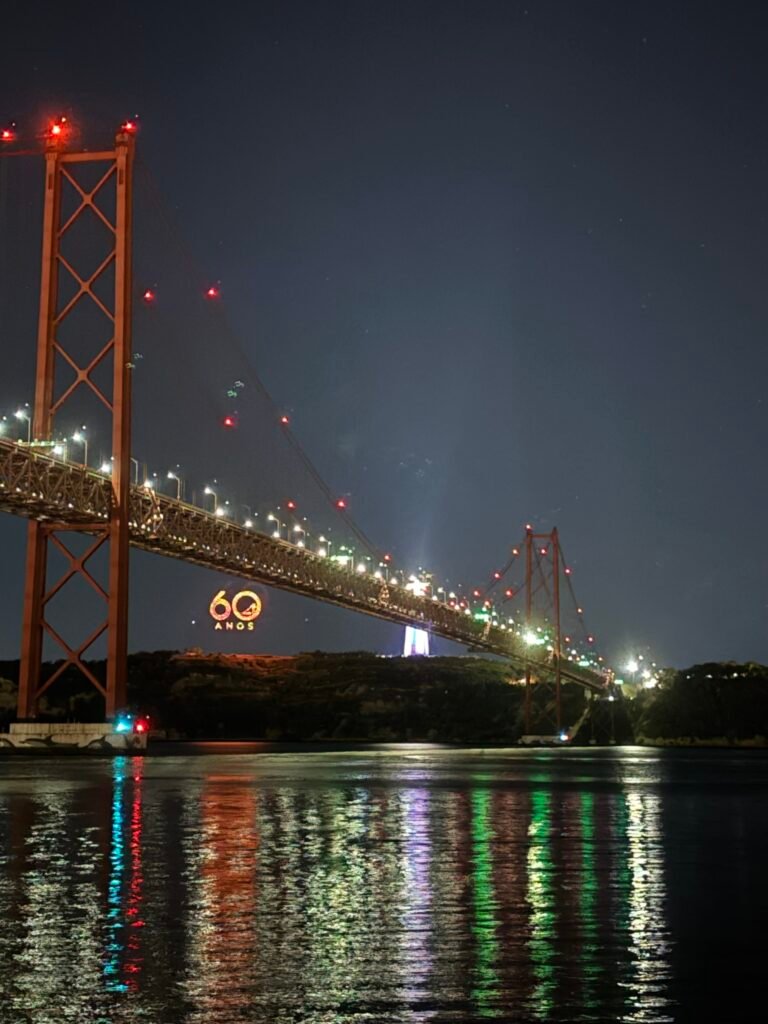
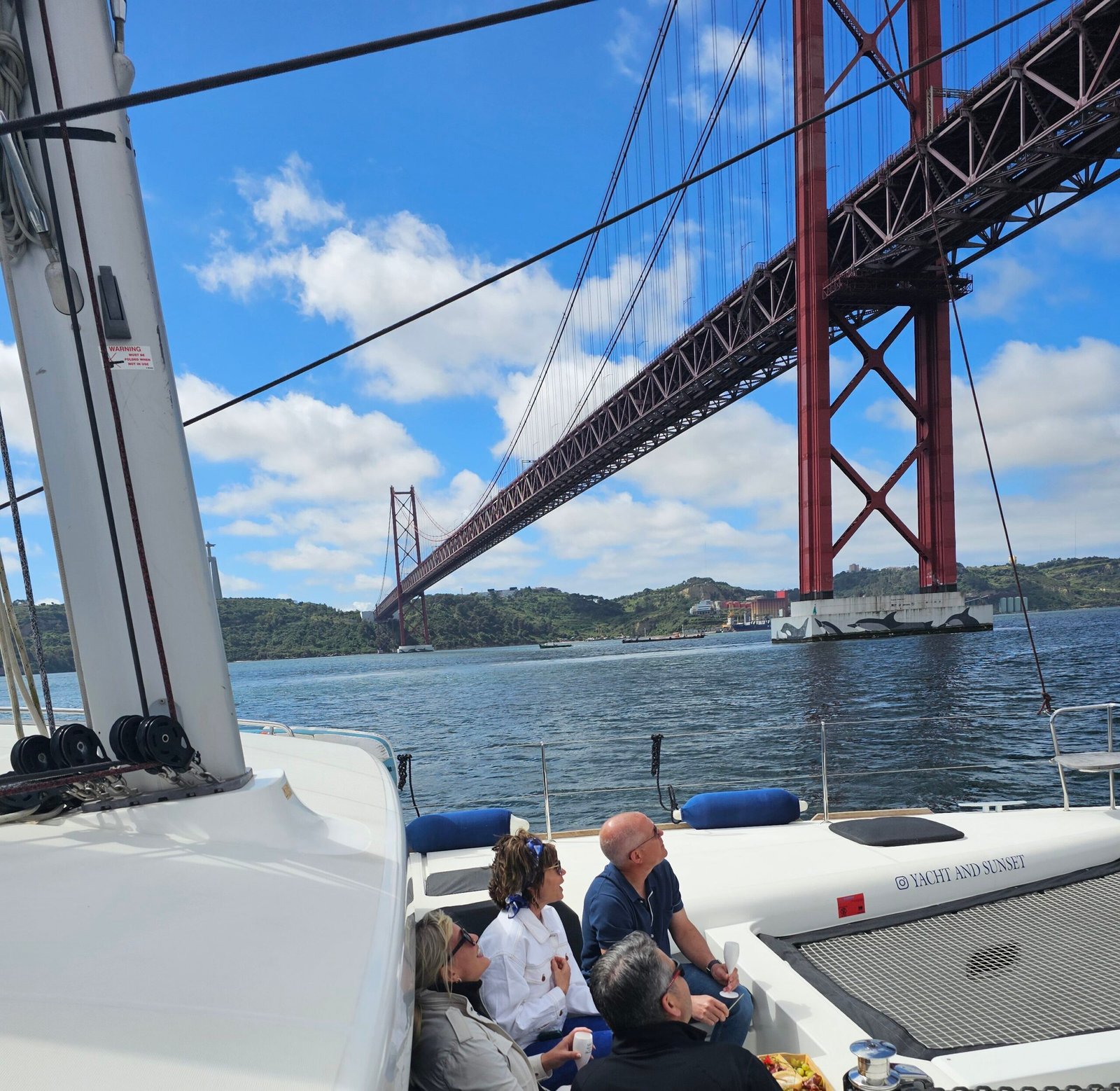
Every day, thousands of people cross the bridge, whether by car or train, arriving in or leaving Lisbon. What most do not know is the unique perspective of those who cross beneath it by boat, encountering the impressive view of the gigantic metallic structure.
It is by sailing the Tagus that you truly grasp the scale and beauty of the 25 de Abril Bridge.
With a total length of about 2,280 meters, the 25 de Abril Bridge crosses the narrowest part of the Tagus estuary, known as the Tagus Narrows. It was this natural narrowing that led engineers to choose this location to build the first permanent link between Lisbon and the south bank.
Today, this area continues to offer one of the most iconic landscapes of the Portuguese capital and is one of the highlights of any river tour.
An engineering feat that changed Portugal
For much of the 20th century, crossing the Tagus was only possible by boat. As Lisbon grew, the need to create a fast and permanent link between the two banks became evident.
Construction began in 1962 and was completed ahead of schedule and under the initially estimated costs—a remarkable achievement for an infrastructure of this scale.
The construction of the bridge, inaugurated in 1966, was considered “the largest public works project” undertaken to date in Portugal, involving around 3,000 workers daily, 14 construction companies (11 of them Portuguese), and tens of thousands of tons of steel, making this infrastructure an international engineering landmark.
The bridge stands out for having a main span of over one kilometer, a distance between anchorages exceeding two kilometers, and main towers rising 196 meters above water level, with the southern pier reaching approximately 80 meters deep below the river level.
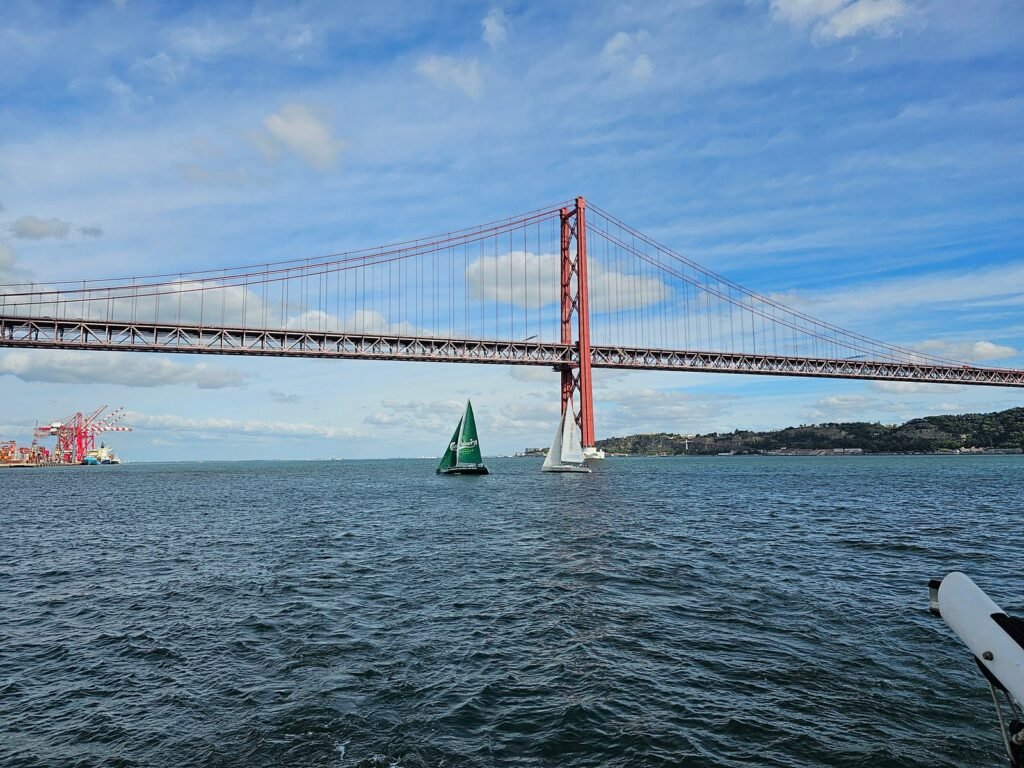

The project was developed by the American firm Steinman, Boynton, Gronquist & London, while construction was carried out by the American Bridge Company, part of the United States Steel group—the same company responsible for building the famous Golden Gate Bridge in San Francisco.
For its time, the project employed the most advanced engineering techniques, including prefabrication of structural elements and the use of high-strength steel cables.
At the time, it was the fifth longest suspension bridge in the world and the largest built outside the United States. Sixty years later, it continues to be among the largest suspension bridges on the planet and remains one of the most impressive engineering works ever completed in Portugal.
Much more than a bridge
Originally named Salazar Bridge, it was named in honor of the then President of the Council of Ministers.
After the Carnation Revolution in 1974, it was renamed the 25 de Abril Bridge, a name that today represents one of the greatest symbols of Portuguese democracy.
Initially built only for road traffic, the bridge gained a new dimension in 1999, when it also began to allow rail traffic across the lower deck.
Currently, about 300,000 users cross the bridge daily, making it one of the most important infrastructures in the Lisbon Metropolitan Area.
It was a project that profoundly transformed life in the region.
The fast connection between Lisbon and Almada boosted the country’s economic development, facilitated the movement of people, and brought together communities that, for centuries, had relied exclusively on river crossings.
At the same time, the bridge has become a true cultural symbol. It is a constant presence in photographs, films, advertisements, paintings, and postcards, and is now one of the most recognized images of Portugal worldwide.
The experience of passing under the bridge
There is a moment that surprises practically every passenger sailing the Tagus.
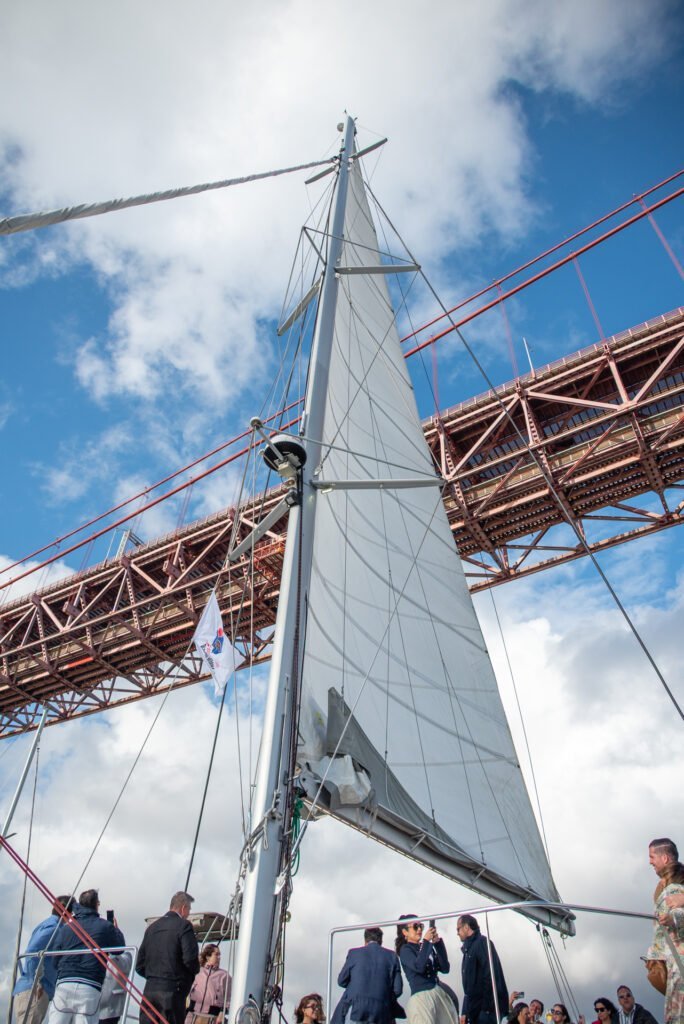
As the boat approaches the bridge, one’s gaze inevitably rises to the deck, which stands about 70 meters high.
Seen from below, the scale of the structure is even more impressive.
A few seconds later, you hear the characteristic hum caused by the constant passage of cars and trains over the metallic structure. It is a unique sound, impossible to reproduce in photographs, that is part of the identity of the 25 de Abril Bridge.
That is precisely why so many people say that the best way to admire this monument is from the river.
A heritage that requires constant care
An infrastructure of this scale requires continuous maintenance.
Throughout the year, technical inspections, conservation work, cleaning, painting, and structural monitoring are carried out to ensure the bridge’s safety and extend its lifespan.
Thanks to this ongoing work, the 25 de Abril Bridge remains ready to serve millions of people for many decades to come.
Pilar 7… and the best view of Lisbon
Since 2017, the Pilar 7 Experience has allowed visitors to learn more about the bridge’s history and enjoy an extraordinary panoramic view over Lisbon.
But, if you ask us, there is an even more special perspective.
Sailing slowly along the Tagus, approaching the structure, and passing underneath one of the city’s greatest symbols is an experience impossible to forget.
It is in that moment that you truly understand the scale of this extraordinary engineering work.
There are many ways to admire the 25 de Abril Bridge: from the city’s viewpoints, from Pilar 7, by car, or by train.
But there is one perspective reserved for those who choose to discover Lisbon by river.
Lisbon Half Marathon. An annual ritual
In 2026, the Lisbon Half Marathon celebrated its 35th edition, consolidating itself as one of the city’s great sporting events. Starting on the 25 de Abril Bridge and finishing next to the Jerónimos Monastery, the race gathers thousands of participants of different nationalities every year. The 2026 edition was marked by a historic moment, with Ugandan athlete Jacob Kiplimo setting a new world record for the half marathon.
At Lisbon Sight Sailing, we have the privilege of passing daily beneath this city icon, offering a unique view of one of Portugal’s most emblematic monuments.
This summer, celebrate the 60th anniversary of the 25 de Abril Bridge with us and discover Lisbon from its best perspective: the Tagus.
Because there are monuments that you live.