Skip to main content Skip to footer


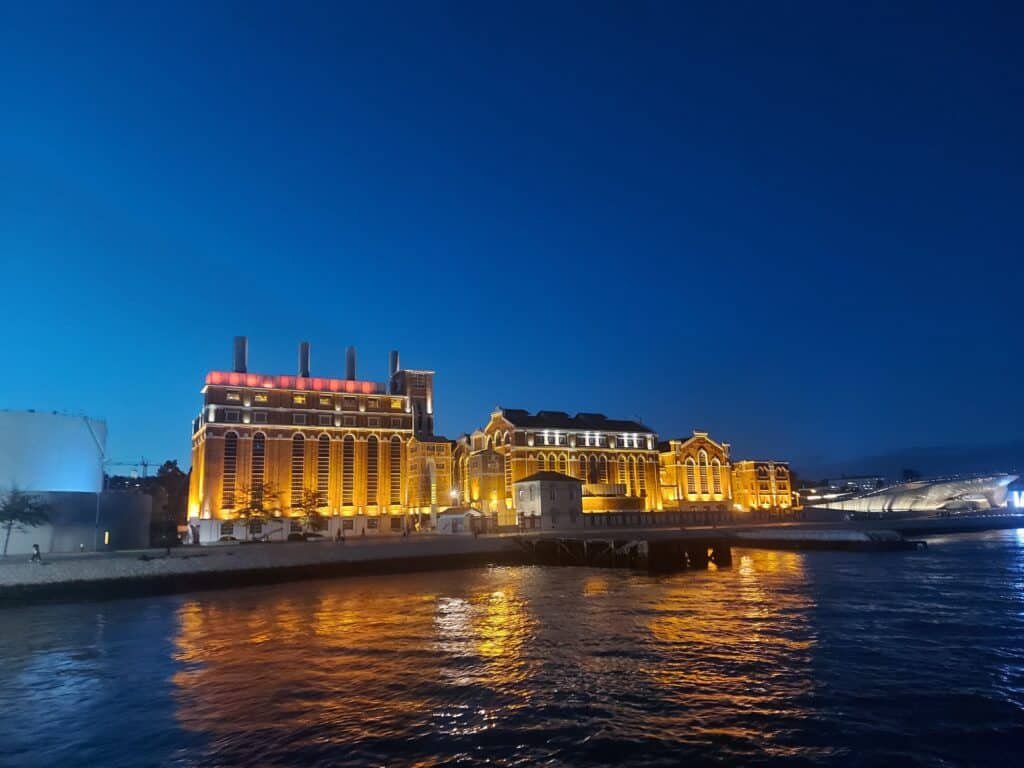
Built in 1908 and operating between 1909 and 1972, Central Tejo was a thermoelectric power plant essential for supplying electricity to the Lisbon region. Inspired by German and English industrial architecture, it was one of the first buildings in the city to be fully lit by electric power. From 1951 onwards, Central Tejo was used as a reserve plant, meaning it only produced energy to supplement the supply from hydroelectric plants.
For more than three decades, it was the largest power plant in the country, providing electricity to the city of Lisbon, its entire district, and the Santarém Valley. However, in 1975 it was decommissioned and removed from the production system. Over time, it underwent several modifications and expansions, going through various construction phases and changes to its production systems.
In a new era of its existence, Central Tejo opened to the public for the first time in 1990 as the Electricity Museum. Shortly after a new period of restoration work on its buildings and equipment, it reopened permanently in 2006.
Today, it preserves its original machinery and functions as a cultural and educational space, hosting international events and promoting energy education.
Your building
Its permanent exhibition, known as the Electricity Factory Circuit, features original machinery in perfect condition, telling the story of this old factory as well as the evolution of electricity up to renewable energy. As an industrial-based science space, it is one of the most visited museum sites in the country.
Central Tejo is housed in an iconic building of early 20th-century Portuguese industrial architecture, featuring an iron structure covered in brick and facades that combine styles such as Art Nouveau and Classicism. It was one of the first buildings to be fully lit with electric energy, becoming a symbol of modernity in Lisbon at the time.
Central Tejo in the Current Context of Sustainability
The relevance of Central Tejo goes beyond its industrial past. By integrating into MAAT, it has become a point of reflection on the future of energy and sustainability. Visitors can explore:
- Exhibitions on renewable energy;
- Stories of energy transition in Portugal;
- Impact of climate change;
- Innovations in sustainable architecture.
Portugal has been one of the European countries most committed to clean energy, standing out for its wind and solar energy production. Central Tejo thus symbolizes the journey from the first steps of national electrification to the current commitment to green energy.
What are the energy sources, how does the production, transport, and distribution process of electricity happen, and who are the scientists who study it? The answers to these and other questions can be found during a visit to this space.
And if you’d like to learn more about the evolution of the Plant and MAAT between 1909 and 2016, you can watch an interesting virtual tour below.
Location and How to Visit
Central Tejo is located in the Belém area of Lisbon, next to the Tagus River, in a space that combines history, culture, and leisure.
- Address: Avenida Brasília, Central Tejo, 1300-598 Lisbon
- Opening Hours: Usually open every day, except for some public holidays. We recommend checking in advance here.
- Access:
- Tram 15E;
- Train: Belém Station;
With a privileged location, easy access and with educational programs, it is an excellent option for the whole family.